Brands today are under constant pressure to deliver thousands of high-quality images at speed. But relying entirely on an in-house team or on a fully outsourced partner can be a recipe for disaster. In-house teams get overloaded. Outsourced teams may lack context. When there is a lack of planning, both models become expensive or inflexible as demands scale.
The solution? E-commerce brands, real estate companies, marketing teams, and high-volume photo studios adopt a hybrid photo editing pipeline. It’s a model that blends the creative control of in-house editing with the scale, speed, and cost-efficiency of an outsourced photo editing service. Add in the new third pillar of AI photo editing services, and businesses can now build an assembly line that is faster, more consistent, and more affordable than traditional workflows.
This article breaks down how to structure that hybrid model, what to keep in-house vs. outsource, how to integrate AI, and how SmartPHOTOeditors (SPE) helps companies build scalable, high-quality pipelines from day one.
Understanding the Hybrid Model: Why it Works
A hybrid photo editing pipeline combines three layers:
- In-house teams
- Outsourced partners
- AI-powered editing tools
These three layers all work together to maximize speed, quality, and efficiency.
Core Advantages
- Scalability without compromising on control: In-house team retains ownership over brand look, while outsourced teams handle repetitive work that needs specialists. Outsourcing is a smart way to handle bulk image edits and scale efficiently.
- Cost optimization: Hybrid teams bring down the cost of hiring, training, and managing large internal teams.
- Flexibility for volume spikes: Seasonal peaks, sales campaigns, and catalog expansions are easier to handle when external bandwidth is built into the workflow.
- Maintained brand consistency: Professional photo editing services and structured style guides create hybrid pipelines to bring consistency.
When to Keep Work In-House
- Crafting and updating the brand’s visual standards
- Editing brand-critical or creative-first images
- Complex retouching requiring direct creative oversight
- Final approval before publishing
- Handling sensitive client-facing revisions
When Outsourcing is Preferable
● High-volume repetitive editing
● Specialized tasks such as image clipping or masking
● Batch product image edits
● Overflow or peak workload support
AI As The Third Pillar
AI photo editing services speed the first-pass editing process, including background removal, exposure correction, and cropping, while human editors refine and finalize the images. This balance reduces cost dramatically.
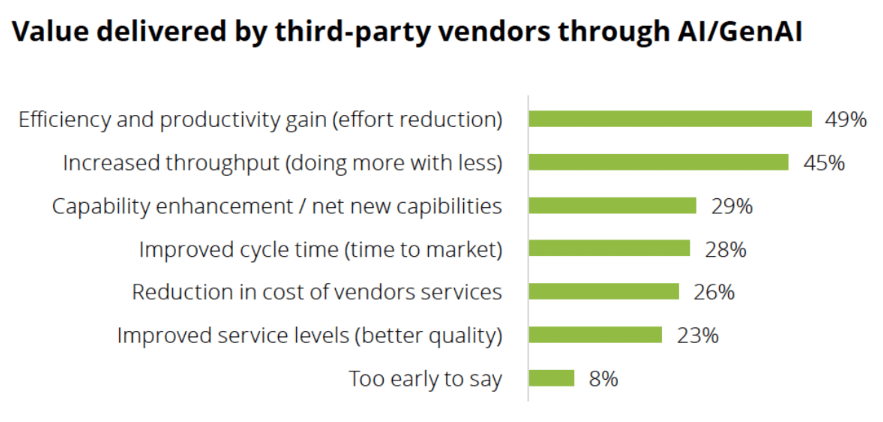
According to a Deloitte study, 60% of organizations are partnering with third-party vendors for AI-powered outsourcing, and the main drivers include increased efficiency and reduced cost.
Identifying What to Keep In-House vs. Outsource
A hybrid model does not eliminate the need for an internal team, but it simply allows them to work smarter. Here is a decision matrix to find out when to outsource photo editing and when to keep it in-house.
| Task type | Volume | Complexity | Brand sensitivity | Recommended mode |
|---|---|---|---|---|
| Basic color fixes | High | Low | Low | Outsource / AI |
| Lifestyle image retouching | Low | High | High | In-house |
| Product white background edits | Very high | Low | Medium | Outsource / AI |
| Creative composite images | Low | High | High | In-house |
| eCommerce batch edits | High | Medium | Low | Outsource |
In short, anything that is high volume, repetitive, expertise-driven or does not require creative decision-making can be outsourced.
Building Your Hybrid Pipeline in 6 Easy Steps
Step 1: Audit your current workflow
Start by evaluating your current production capability.
- Track existing monthly image volume and average turnaround times
- Identify recurring bottlenecks such as backlog or long revision cycles
- Calculate the true cost per image (software, labor, training, and overhead)
- Categorize edits by type, difficulty, and frequency
- Identify repetitive tasks suitable for automation or outsourcing
This creates clarity on where in-house time is being wasted.
Step 2: Define quality standards & style guidelines
Your hybrid pipeline lives or dies by documentation.
- Build a detailed style guide with visual examples
- Standardize resolution, file formats, DPI, and color profiles
- Create before/after samples for each edit category
- Clearly define acceptable variance thresholds
Style guides help ensure accurate product photo editing and reduce returns.
Step 3: Select the right photo editing outsourcing service provider
When choosing a photo editing service provider, evaluate:
- Portfolio specialization aligned with your industry
- Turnaround time guarantees & SLAs
- Quality control processes across multiple QC levels
- Data security, encryption, and NDAs
- Ability to scale to 10k+, 50k+, or 100k+ images/month
A reliable photo editing service partner like SPE offers a cost-efficient model based on your volume.
Pro-tip: Understand outsourcing image editing myths to assess vendors more objectively and avoid overpaying.
Step 4: Establish communication protocols
Great hybrid workflows are built on tight coordination. Set up dedicated communication channels, schedule regular check-ins, and use project management tools to track progress. This eliminates miscommunication and revision loops.
Step 5: Integrate AI-powered tools
AI editing and human editing can work together to deliver quality at scale:
● AI handles: background removal, lighting fixes, cropping, standardization
● Human editors handle: creative judgment, complex retouching, brand consistency
Read more about AI automation in professional photo editing in this guide.
Step 6: Create quality control checkpoints
QC frameworks ensure consistency across thousands of images.
- Review the first 10–20 images as calibration
- Set batch sampling rules (5–10% depending on volume)
- Conduct final in-house approval
- Maintain revision stats, error logs, and TAT dashboards
- Share feedback weekly with the outsourced team
Why SPE is the Right Outsourced Photo Editing Service Provider
SPE is one of the industry’s most trusted photo editing service providers, chosen by global ecommerce brands, real estate photographers, creative agencies, and high-volume studios.
Why SPE stands out:
- 13+ years of experience delivering high-volume, high-accuracy edits
- Expertise across ecommerce, real estate, fashion, jewelry, portraiture, automotive, and more
- Customized hybrid workflows tailored to your brand
- 24/7 editing photo services teams enabling global turnaround
- Dedicated quality checkpoints ensuring brand consistency
- Scalable operations capable of processing 10,000+ to 150,000+ images monthly
- Integrated AI workflows for speed and cost-efficiency
For brands building hybrid pipelines, SPE becomes an extension of your in-house team.
Case study
In a recent project for a Danish women’s garment brand, SPE completed over 700 garment image clippings in under 24 hours. We delivered flawless, e-commerce–ready images with transparent backgrounds, optimized lighting, and precise clipping paths.
Even though the client had a tight deadline and low-quality originals, our team used a mix of hand-drawn and automated clipping techniques, thorough QC, and even provided complimentary retouching. Result? Zero revision requests and half a dozen new projects.
Conclusion
A scalable hybrid in-house and outsourced photo-editing pipeline helps brands handle high-volume visual content. It combines creative control (in-house), scalability and efficiency (outsourced editing), and automation (AI photo-editing services) to deliver consistent quality at speed.
Right partners, like SPE, work as a flexible, reliable, and cost-efficient extension of their team, so that you can grow without sacrificing quality or speed. Talk to us today.
FAQ
SmartPHOTOeditors
 Prev
Prev