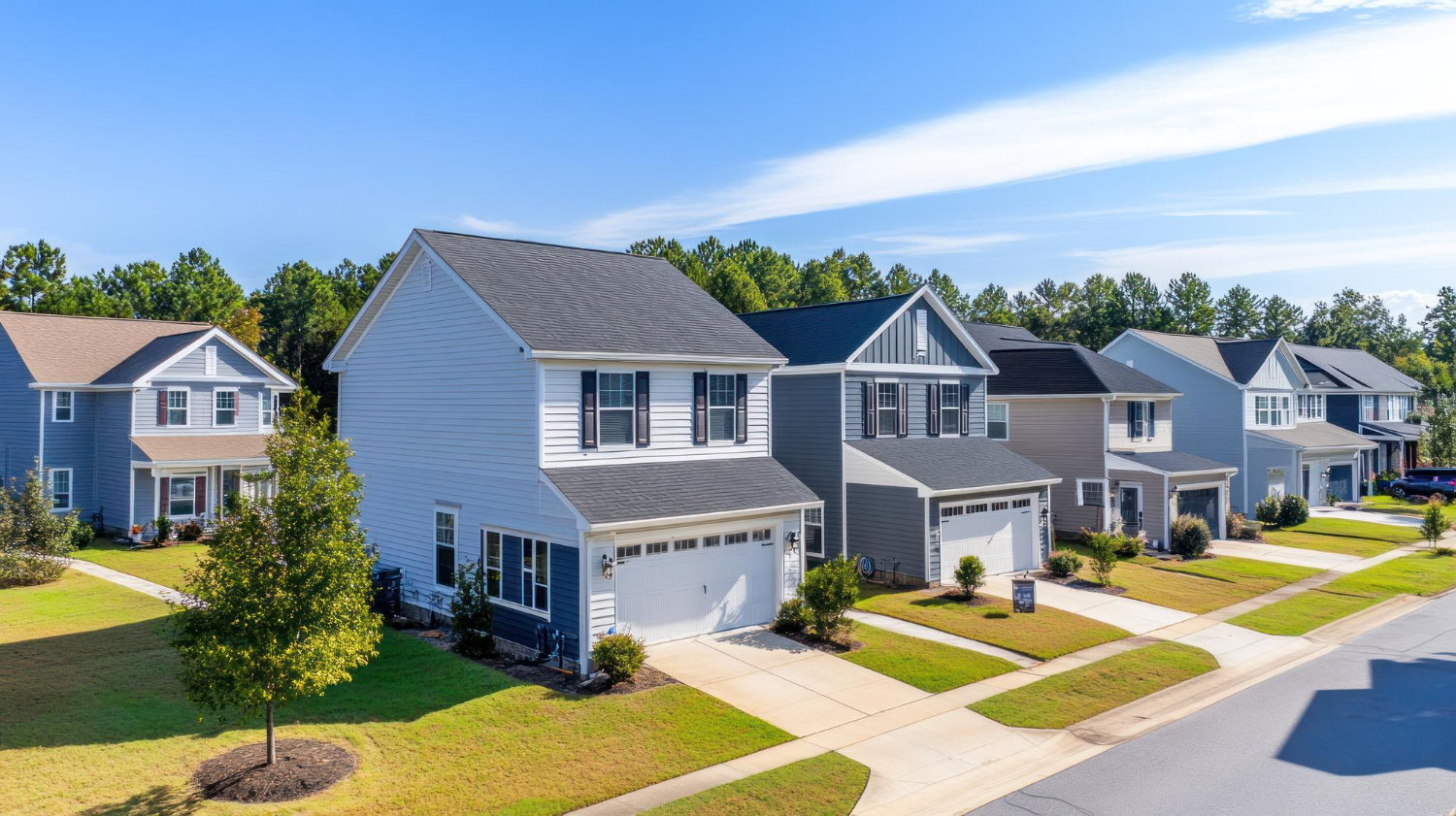
Real estate is a visual business long before it becomes a financial one. According to a survey conducted by Redfin, 63% of customers who made an initial offer for a property in 2020 did not see it in person. In an industry where most buyers make decisions in seconds while scrolling through listings, high-quality photos often determine whether a property receives attention, inquiries, and bookings or vanishes beneath competing listings.
Low light, dark corners, window glare, sudden weather changes, or vacant rooms that lack warmth are some of the challenges photographers face when shooting real estate. This is where real estate photo editing comes in. It is a powerful tool that changes raw captures into listing-ready images that sell the story of a space.
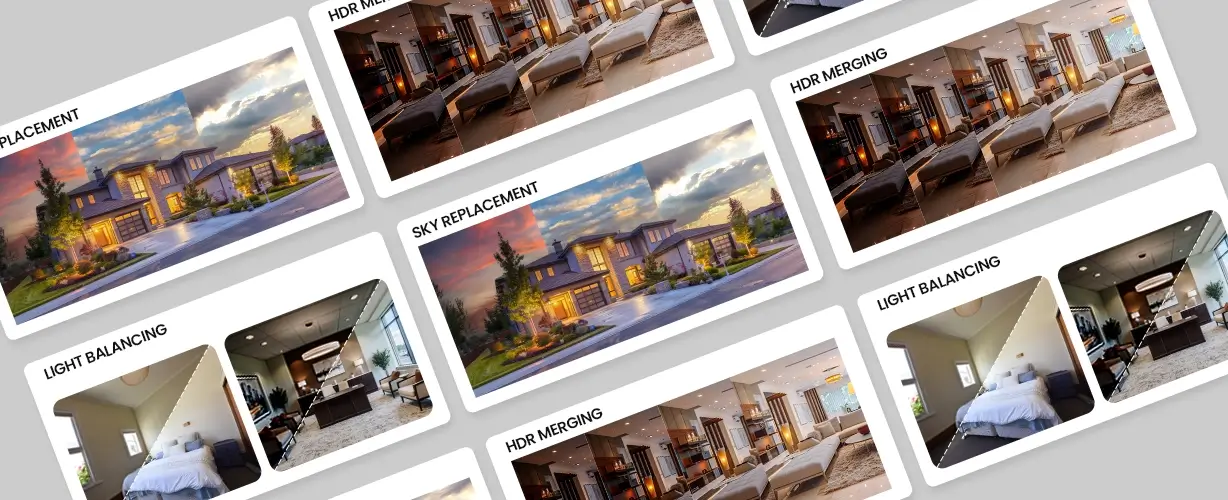
For real estate photo editing software agencies, property marketing teams, architectural studios, real estate SaaS platforms, and short-term rental operators, this playbook offers a practical walkthrough of editing real estate photos, focusing on HDR merging, sky replacement, and interior light lifting.
Why Editing Real Estate Photos Matters
Buyers don’t react to square footage; they react to how a space feels. A room that looks dark or unappealing on camera can appear spacious, warm, and full of possibility with the right edits.
Unedited photos often struggle with:
- Low dynamic range — bright windows and dark shadows in the same frame
- Flat skies and dull exteriors caused by weather or time constraints
- Mixed color temperatures make interiors appear yellow or blue
- Visual distractions such as wires, wall marks, or clutter
- Vacant rooms without scale or emotional appeal
Pre-editing optimization for real estate photos presents the property closer to the way the eye sees it in person. That emotional accuracy drives measurable outcomes: higher click-through rates, more in-person tours, and reduced days on market.
HDR Merging: The Backbone of Real Estate Photo Editing
Lighting is rarely perfect inside properties. Windows overpower interiors, ceiling lights create uneven tones, and shadows obscure key architectural features. HDR real estate photo editing solves this by merging multiple exposures of the same frame into one balanced image.
How Many Exposures Should You Bracket?
The ideal range for real estate HDR is five to seven exposures, spaced around ±1.5–2 EV (example: –4, –2, 0, +2, +4).
This range produces enough tonal data to recover bright exterior details, well-lit interiors, and natural contrast without the artificial “HDR glow” caused by excessive merging.
Anything below five exposures risks lost highlights or clipped shadows; anything significantly above seven creates heavy files with minimal benefit.
Where HDR Makes The Biggest Difference
- Living rooms and kitchens facing large windows
- Bathrooms with reflective surfaces
- Entryways with changing light angles
- Exteriors shot in bright sun or twilight
HDR is the difference between photos that seem flat or washed out and ones that feel vibrant, evenly lit, and polished without looking altered.
Real-World Scenario
Let’s now look at a case study where SmartPHOTOeditors (SPE) helped a client with a few exceptional photo editing techniques.
The problem
A Florida-based visual imaging firm was specializing in delivering high-resolution images, aerial photography, and virtual tours. But they faced a lack of skilled workers and high software costs. They relied on freelancers who eventually proved to be unreliable. Overall, the company faced a decline in revenue as well as new leads.
The solution
SPE assigned team members with experience and expertise to handle the project. They used Adobe Photoshop (HDR image editing), Matterport (3D floor plan conversion), 3D Vista (virtual tour creation), PTGui (Panorama stitching), and Adobe Lightroom(still images).
The Outcome
After taking over the project, the client’s business saw a 95% boost in CSAT ratio and also increased profits by 30%. Read more about this project here.
Sky Replacement That Respects Realism
A stunning property photographed under a dull gray sky often fails to get the attention it deserves. While photographers cannot control the weather, editors can replace skies to restore emotional tone.
Effective sky replacement respects:
- Light direction: matching shadows and highlights
- Color temperature: warm skies for sunsets, cooler for mornings
- Seasonal accuracy: summer skies shouldn’t hover over bare trees.
The goal is not drama but visual honesty. A realistic sky adds depth, contrast, and optimism, leading viewers to imagine the experience of being outside the property, which is a powerful motivator in vacation rental and suburban home sales.
Real-World Case Study
Let’s explore another case study where SPE assisted a client in reducing the turnaround time for real estate photo editing, while maintaining high image quality.
The problem
For instance, one of SPE’s client, a US-based real estate photography team, needed images of 12 properties to be processed, enhanced, and transformed into twilight shots. They found us online and reached out. The challenge was that each image took about 45 minutes to edit.
The solution
At SPE, we allotted experts to this project who worked on editing the images. They used the built-in software and filters to do this work and sent the samples to the client for any further edits.
The outcome
The decision to outsource paid off for the client as they saved 60% in editing costs. The client was so impressed that they decided to outsource some more projects in the future.
Light balancing and Shadow Lifting for interiors
In mixed lighting environments, some parts of a room appear dark while others blow out completely. Editors use selective brightening to illuminate key details without losing texture or realism. Add to this virtual renovation and staging for real estate listings, and interiors will look warm and welcoming.
Examples where lifting helps:
- Bedroom corners hidden in shadow
- Kitchen countertops lack definition.
- Woodwork and flooring where grain needs clarity
- Staging and decor softened by low light
This technique keeps the image believable. It clarifies the room without creating flat, unnatural lighting.\
Basic Editing vs Advanced Editing
Not all photo editing has the same purpose or value. Basic editing prepares a photo for visibility; advanced editing prepares it for persuasion.
| Basic editing | Advanced editing |
|---|---|
| Exposure correction | HDR merging from multiple exposures |
| White balance & colors | Sky replacement |
| Cropping & straightening | Light balancing and lift adjustment |
| Noise reduction | Removing clutter and distractions |
| Minor sharpening | Virtual staging/renovation |
| Alignment | Window view balancing |
Advanced editing elevates an image from functional to attractive, essential for premium listings, architectural showcases, and luxury rentals. In order to get the best real estate listing photo enhancement & retouching businesses can outsource real estate photo editing.
When to Outsource vs When to Edit In-House
Real estate photography photo editing agencies typically handle basic edits in-house, but outsource HDR and advanced corrections to experienced editors for consistency and increased turnaround capacity.
- Brokerages and property marketing teams save time by outsourcing instead of hiring editing specialists and buying software.
- Short-term rental operators benefit from quick transformations of ordinary spaces into aspirational environments.
Outsourcing allows teams to scale output during peak listing seasons without losing quality.
Turnaround typically looks like:
- Simple adjustments: 4–8 hours
- HDR, sky replacement, interior lift: 24–48 hours
- Virtual staging/renovation: 48–72 hours
Mastering the real estate photography business operation can seem easier when you know when to outsource projects to a real estate photo editing company.
Final Thoughts
The best real estate photos are not accidents — they are intentional combinations of technical skill, creative interpretation, and thoughtful editing choices. HDR merging reveals the full tonal reality. Sky replacement restores atmosphere and interest. Shadow lifting returns depth that cameras often lose.
In a market where houses with high-quality images sell 32% faster, investing in professional editing is a direct investment in marketability, inquiry volume, and closing speed. For many teams, partnering with a specialized AI real estate photo editing company like SPE is not a luxury; it’s a practical advantage.
Ready to improve your real estate listing images? Send your sample batch to SmartPHOTOeditors and experience the difference firsthand.
FAQs
Can I use HDR, sky replacement, and retouching for both interior and exterior shots?
Yes. Editors routinely apply HDR merging, sky replacement, and interior light balancing across full property sets.
Why do real estate photos need editing?
Editing restores depth, brightness, accurate color, and emotional presence to reflect the real experience of the property.
What’s the difference between basic and advanced editing?
Basic edits correct exposure and perspective; advanced edits reshape the emotional feel of the space using HDR, sky replacement, and retouching.
What is the typical turnaround time?
Simple corrections may return in 4–8 hours; full HDR and retouching in 24–48 hours; staging in 48–72 hours.
SmartPHOTOeditors
 Prev
Prev