Did you know that adding twilight and HDR photos to your property listings instead of regular photos gets up to 50% more clicks and sells much faster?
That’s because buyers fall in love with homes online first. They can make a property look ordinary or stunning. Twilight real estate photos add that warm, inviting glow that makes a home feel luxurious. HDR photos make every room look balanced and bright, very close to how it appears in real life.
Together, they help listings stand out, attract more buyers, and even boost property value.
In this article, we’ll learn how twilight and HDR photos work, why they’re worth it, and how you can use them to make every property shine.
What are Twilight Real Estate Photos and Why Do They Work
Twilight real estate photography captures properties during the “blue hour” or “golden hour”. It’s the small window of 20-30 minutes just after sunset or before sunrise. That’s when natural light balances between the glowing warmth of interior lights and the cool, cinematic blue of the sky.
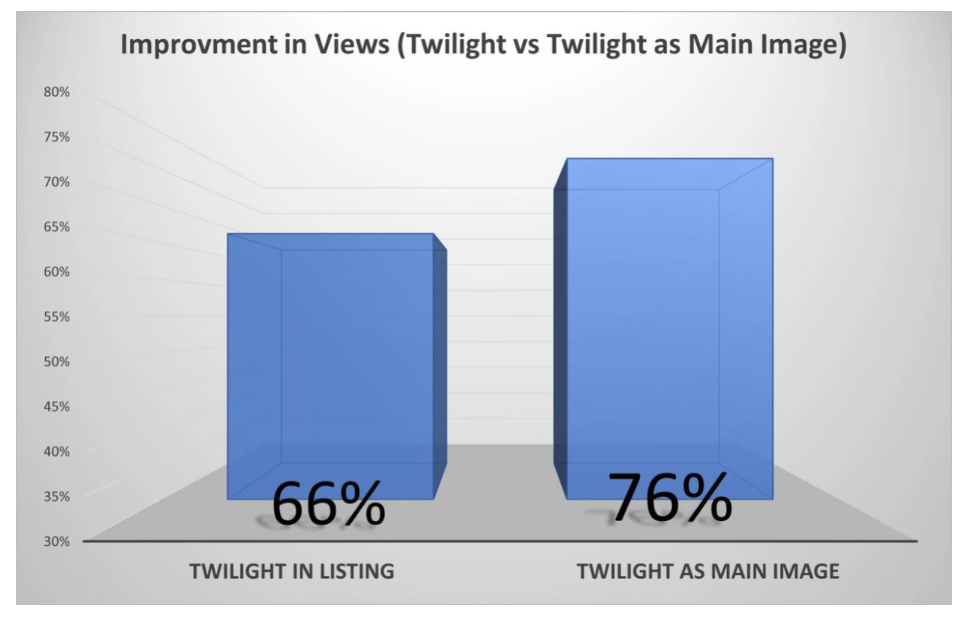
According to recent research, real estate listings that include a twilight image receive nearly 66% more views. And listings that use a twilight image as their hero image get 76% more views than those without.
That’s because the visual effect is warm, outdoor lighting, making it dramatic. It makes the entire property look like it’s straight out of some magazine. Psychologically, these images make the property feel comfortable, exclusive, and luxurious.
Twilight shots work especially well for homes with outdoor lighting, pools, architectural features, or scenic backdrops. They’re always added in luxury marketing. But now more and more mid-range properties are also using real estate twilight photo retouching to improve their listings and stand out.
What is HDR Photography and How Does it Work in Real Estate
HDR (High Dynamic Range) photography solves one of the biggest challenges in real estate photography, i.e., uneven lighting. Walk into any property and you’ll see the problem: bright
windows blow out to white, while corners and hallways disappear into shadow. Standard camera sensors can’t capture the full range of light the human eye sees.
HDR fixes this by blending multiple exposures of the same shot — typically one for highlights, one for shadows, and one for midtones. The result? Balanced, natural-looking images where every detail is visible. You get the complete view of the outside and inside clearly. Colors look more accurate, spaces feel larger, and the overall visual consistency makes listings feel more professional.
For interiors, especially rooms with windows or mixed lighting, HDR image enhancement for property interiors has become the industry standard for quality listings.
The ROI of Professional Twilight & HDR Photography
Let’s talk numbers. According to an analysis by a real estate photography and visual marketing company, homes with professional real estate images sell listed properties 32% faster than those with basic photos. That’s because emotional value drives higher engagement, which in turn improves showing requests and boosts competitive offers.
A well-executed twilight shot can make a $500K home look like a million-dollar listing. So, you attract higher-paying buyers and set expectations that justify premium pricing.
This ROI works across different property types.
- Luxury homes use twilight shots to show architectural prestige.
- Vacation rentals use them to increase booking appeal.
- New-build developers create consistency across entire communities.
- Short-term rental managers increase nightly rates with elevated visual branding.
How to Take Twilight & HDR Real Estate Photos: Tips & Techniques
Timing is everything when shooting twilight real estate photography. The best time for twilight photos is approximately 20-30 minutes after sunset (or before sunrise), when the sky retains that rich blue glow but artificial lights are already effective.
Here’s the basic approach:
- Equipment: You’ll need a DSLR or mirrorless camera, a good tripod, and if possible, a remote shutter release. Plan to shoot bracketed exposures for blending later.
- Setup: Turn on all the interior and exterior lights. Keep the curtains open. And make sure the property looks like someone lives there, without looking messy.
- Shooting: Capture multiple exposures at different settings. One for the bright interior lights, one for the darkening sky, and one for overall balance. And don’t let direct reflections from streetlights or car headlights reduce the visibility.
The magic happens in post-processing, where exposures are blended to create that signature twilight look. Many photographers partner with services offering outsourced real estate photo editing for photographers to ensure consistency and professional polish across all their shoots.
How to Shoot & Edit HDR Real Estate Photos
To edit, first merge these exposures using HDR photo software, like Adobe Lightroom, Photomatix, or Aurora HDR. The process involves:
- Tone mapping that balance highlights and shadows
- Adjusting color temperature
- Fine-tuning contrast to avoid the over-processed look that plagued early HDR photos
The key to great HDR real estate photos is in balancing the natural look, not hyper-saturated, unreal images. That’s why many professionals outsource this step. Professional editors know how to improve HDR real estate photos for better detail while keeping them natural. And they ensure every image looks consistent across all your listings.
For virtual tours and 360-degree showcases, HDR becomes even more important. Learn more about the role of HDR photo editing in virtual tours.
Why Choose Smart Photo Editors
When it comes to professional real estate photo editing, experience and consistency matter. Smart Photo Editors brings over 15 years of global experience working with photographers, agencies, and developers.
- Expertise: From end-to-end twilight enhancement to precise HDR blending, sky replacements, and lighting corrections, we have the experts for real estate imaging.
- Scalability: Whether you’re editing 50 photos or 5,000, Smart Photo Editors provides the same attention to detail across bulk projects. This makes us ideal for brokerages and agencies managing multiple listings simultaneously.
- Quality control: Our ISO-certified processes and dedicated QA teams make every image of professional standards. No over-the-top editing, no inconsistencies, just polished photos that are market-ready every time.
- Cost-effective & reliable: Flexible pricing models and quick turnaround times mean you get professional results without the overhead of in-house editing teams
Real results: When a New Zealand-based HDR photography business needed to break into a competitive new market, they returned to Smart Photo Editors after 2.5 years. Despite editing 40-50 photos daily with a 16-hour turnaround, Smart Photo Editors delivered 100% quality consistency, helping the client successfully launch high-quality virtual tours and secure ongoing contracts in their new territory.
Related reading: Take your property marketing even further. Check out Drone Photo Editing That Boosts Property Sales to see how elevated perspectives can improve your listing’s impact.
Turn listings into experiences
Twilight and HDR photography turn property photos into compelling visual stories. These techniques create emotional engagement, project visual sophistication, and deliver measurable ROI through faster sales and higher perceived value. Standout imagery is the difference between viewing and selling.
CTA: Get stunning twilight and HDR edits that help your properties sell faster. Contact Smart Photo Editors today.
FAQs
Are twilight and HDR photography worth the extra cost for a typical property listing?
Yes, for most properties. Homes that add professional photography in their listing sell faster and can command higher prices. The small additional cost is a very small price to pay compared to the potential returns you can get from faster sales, higher offers, and increased buyer interest.
What is the best time of day to schedule a twilight photo shoot for real estate?
The best time for twilight photos is approximately 20-30 minutes after sunset or before sunrise. It’s when the sky is rich blue in color, while artificial lights are just bright enough to create that typical warm interior glow.
How many photos should a listing include and when should twilight shots be used?
A property listing should include 25-40 photos. It depends on the home's size and features. Twilight shots should be used for the selling point of your property like front elevation, pool areas, outdoor living spaces, and scenic backyard views. Use HDR photography for all interior rooms and daytime exteriors. This combination works best for visual impact while managing production costs.
SmartPHOTOeditors
 Prev
Prev